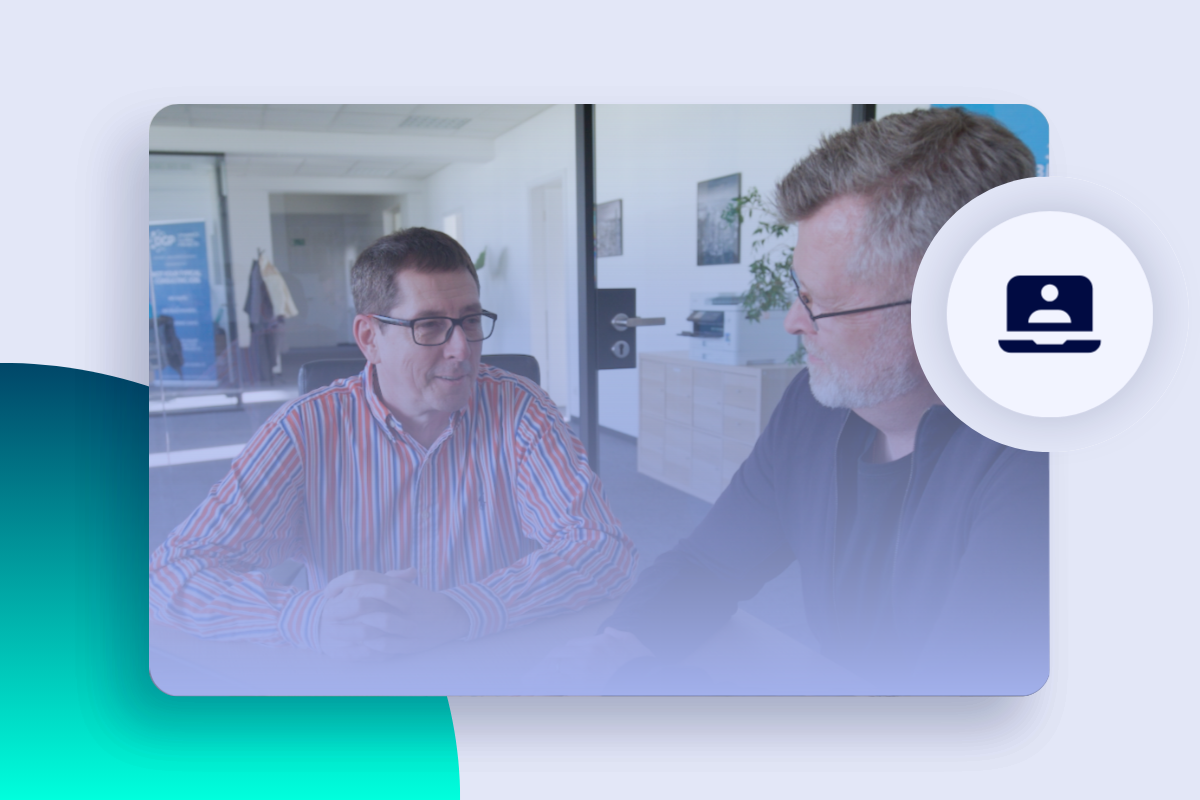
Listen to the full episode — approx. 48 minutes
Projects rarely fail because the software is impossible. They fail because decisions are unclear, delayed, or constantly revisited. This episode provides concrete frameworks from three practitioners with decades of combined experience managing large international BC programmes.

In Episode 4 of Over Budget, Frank Maier is joined by Marco Hartmann, a senior project manager with decades of experience in large international ERP implementations, and Klaus Feldam, a former IT manager who has overseen Business Central programmes from the customer side. The episode examines governance: what it means in practice, why it breaks down, and which structures keep complex programmes under control.

Marco Hartmann describes a governance breakdown in which 19 key users appeared unannounced at a steering committee to re-debate a decision that had already been escalated and documented. Frank Maier recalls a customer that spent over a year unable to decide whether to use speaking article numbers, a feature unused in the industry for 15 years. Klaus Feldam describes executives who sign off budgets and then disengage, turning steering committees into monthly formalities while real problems accumulate below the surface. These patterns appear in the majority of ERP programmes that exceed budget or timeline.

For BC partners running international programmes, this episode addresses three governance instruments directly: how to prepare and run steering committees that actually make decisions, why a change control board is non-negotiable regardless of project size, and what rules international rollouts require for managing subsidiaries. For project sponsors and steering committee members, it answers the simpler question: what does effective governance actually require of you?

“Governance is more than just a document. It’s a process that has to live through the project and stay alive through the project.”

Over Budget · EP 04 · Key take aways:

  • Governance is a living process, not a document. Every project has a project charter. The ones that fail are the ones where that charter is prepared at kickoff and never revisited. Governance only works when the structures are actively used throughout the programme lifecycle, not filed and forgotten.

  • The most common governance failure is not the absence of structure, but the absence of trust. When team members do not feel safe raising problems to leadership, steering committees receive green reports while real issues accumulate below the surface. The meeting looks fine. The project is not.

  • Decision avoidance does not remove problems. It moves them forward in time, compounding cost and complexity at every step. Frank Maier: “If you avoid to decide, it never removes the problem. It just moves the problem further down the timeline.”

  • Change control boards give project managers the structural authority to say no. Without a formal process, change requests are evaluated informally between two project managers, with no business involvement and no criteria. With a board, each request must demonstrate business value, criticality, and impact. Saying no becomes a structured outcome, not a personal judgement.

  • International rollouts require explicit written rules about what subsidiaries are and are not permitted to change, agreed before the project starts. Without them, subsidiaries negotiate individual accommodations, creating process divergence that increases development cost

  • Steering committee preparation before the meeting determines whether the meeting works. Going into a steering committee without pre-aligning every participant is a governance failure in progress. Surprises in front of senior executives reliably produce the worst possible decision-making environments.

  • ERP projects are business change programmes, not IT projects. The reason governance is so complex is that the project must account for business operations, local legal requirements, and organisational change, not only system configuration. IT can handle delivery. Only the business can own the process.

Got questions — or a topic worth a podcast?